
The Box
“Above all else, guard your heart, for everything you do flows from it.”
— Proverbs 4:23
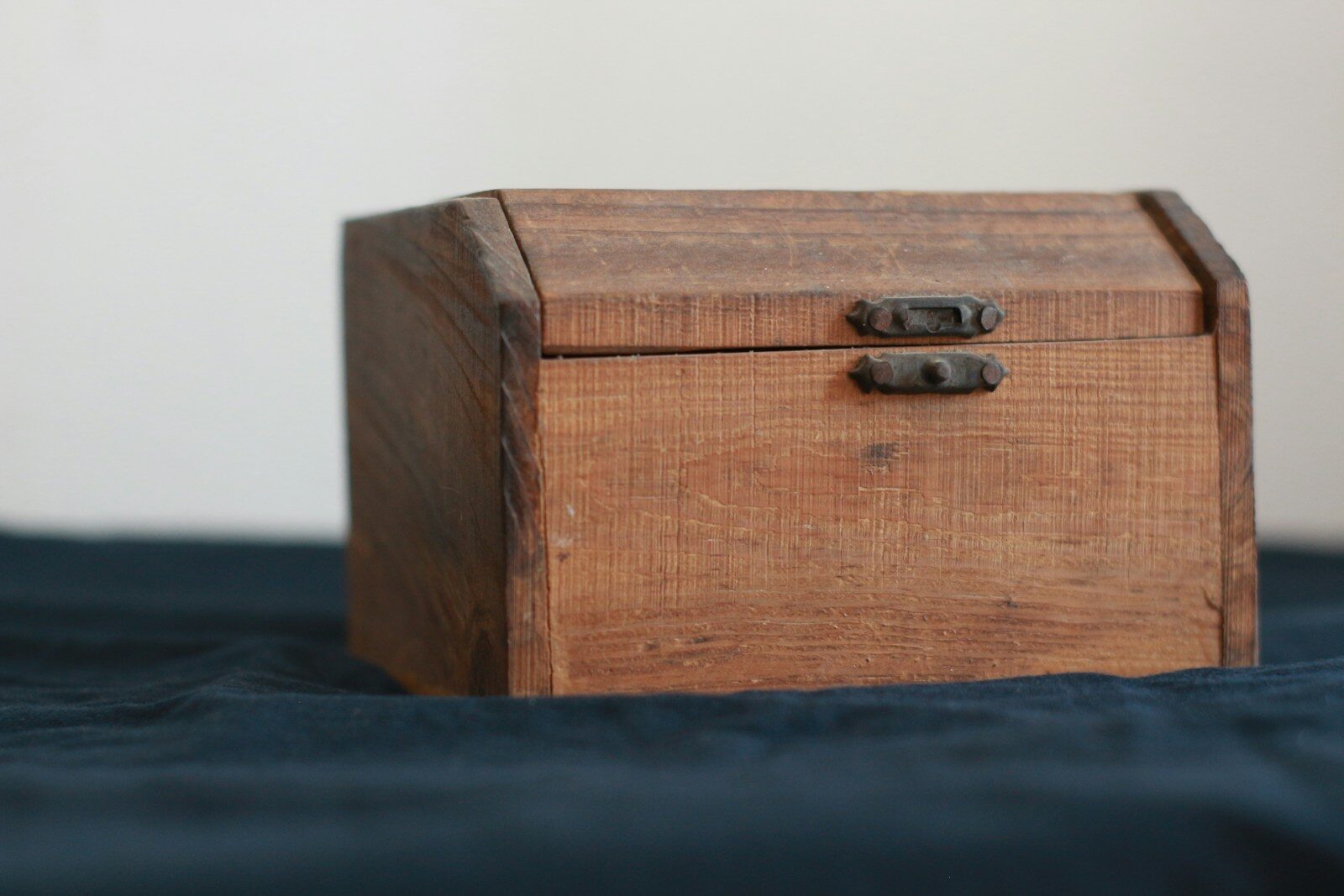
Everyone has a box.
You may not have thought of it that way. It isn’t a thing you can hold, though you can almost feel its weight. There are objects that gesture toward it — the little dish on my dresser scattered with things that pull me back to other days, like an old tin a kid fills with a favorite matchbox car and a bent baseball card. But the box I mean sits somewhere just behind the sternum, or maybe deeper — past the ribs, past the breath, somewhere in the marrow of who you are. You can’t put a padlock on it, though sometimes you try. You can’t show it to anyone, though sometimes, in the unguarded hours, they catch a glimpse of it anyway.
The box is where you keep what you can’t let go of.
———
Mine has a few silver dollars in it.
Four of them, pressed into my small hand by my grandfather when I was young enough that the weight of them seemed enormous. He said something when he gave them — something steady, the kind of thing grandfathers say when they’re trying to press more than coins into your palm. I don’t remember the exact words now. But the coins are still there. I reach for them sometimes in my thoughts without quite knowing I’m doing it.
There’s also a trinket. One half of a matched pair. I gave the other half to a woman early in our marriage, before we knew everything about each other, before we’d been tested and worn down and built back up. I’ve kept my half in the box ever since. I take it out on the hard days. I take it out on the good ones too.
These are the harmless things. The tender things. I’m glad they’re in there.
But.
———
The box is also where I keep the other things.
The ambitions I haven’t admitted out loud — the ones that would embarrass me if I spoke them in the daylight. Some of them arrived quietly, tucked in through a side door I didn’t know I’d left open. A hurt absorbed in childhood. A disappointment that didn’t announce itself as formative but was. Somewhere along the way I made commitments to myself — silent ones, the kind no one witnesses. “I won’t let someone hurt me like that again.” Into the box goes a guardedness, practical enough on the surface, but slowly hardening into something that keeps out more than pain. “I won’t be looked down on.” Into the box goes a toughness, necessary once, but worn so long it starts to feel like a face.
The envy I felt when someone else’s name was called first — the winning poem in first grade, the starting spot I wanted — a thin cold thing that coils in the chest when I see them celebrated. The what-ifs that surface at 2 a.m.: What if I’d chosen differently? What if I’d been braver? What if it’s too late? The pride that wraps itself so carefully in humility that I can almost convince myself it isn’t there. The insecurities that move in quietly and take up permanent residence.
The fears. Oh, the fears. They’ve been in the box so long they’ve pressed grooves into the wood. And they have a gravity to them — when a new trial appears, they draw it in, like iron to a magnet.
———
Here’s what I’ve learned about the box: it doesn’t stay closed.
What lives inside it leaks. And more than that — it attracts. Like calls to like. The contents of the box reach out and pull in whatever confirms them, deepens them, feeds them. It shapes the way I look at people before they’ve said a word. It determines what I reach for when my hands are idle. It hums underneath conversations I think are about something else entirely. A man carrying envy in his box will find reasons to diminish. A man carrying fear will find reasons to retreat. A man carrying pride will find reasons to resist. A man carrying the wounds of unresolved pain will find that it colors everything — the way he reads a room, the way he hears a tone of voice, the way he decides what is safe and what is threat.
Not always loudly. Sometimes just in the lean of a sentence. The flicker of a choice.
This is the quiet and terrible truth: we become what we keep.
The things we dwell on — the things we return to in the car, in the streets, in the gray stretch before sleep — those things are not passive. They are working on us. They are making us. The theologians have a word for it: formative. The box forms us from the inside out, and we go on thinking we are deciding freely, not noticing that the box decided first.
———
I don’t think the answer is to empty the box.
The silver dollars stay. The half-trinket stays. Memory stays, love stays, even honest grief has a right to its place in there. The Scriptures don’t call us to a scoured, affect-less emptiness. They call us to something harder and better than that.
Guard your heart. Not abandon it. Guard it. The word implies something worth protecting, and also something vulnerable enough to need it. It implies intention. Attention. The ongoing work of being honest about what you’re carrying and asking whether it ought to be carried at all.
But set alongside the terrible truth is a wonderful one. The same heart that has been filled by hurt and habit and the slow accumulation of years can be filled by something else entirely. It can be given over. It can be reordered. The thoughts of God — the ways He desires to shape our reality and inform our being — are available to us. The box does not have to stay as it is.
What would it look like to let it be shaped by what is good? Not good in the thin, congratulatory sense — but good in the oldest, most solid sense of the word. Noble. True. Lasting. What if, slowly, by grace and discipline and a thousand small decisions, the box began to fill with things worth keeping?
Not the greedy ambitions, but the true ones — the ones that ask, what am I made for, and am I spending myself on it? Who do I belong to? What has He called me to become?
Not the fears that diminish, but the reverence that expands — the God-breathed life pressing back against the dark.
Not the pride that closes, but the wonder that opens.
Not the envy that takes inventory of others, but the gratitude that keeps inventory of gifts.
———
A heart given over to Jesus — not once, at an altar, as a transaction, but daily, as a practice, as a surrender — becomes a box that looks different over time. Not perfect. Not polished. But reordered. The coins and the trinkets still there, still dear. But the fears gradually losing their purchase. The pride gently, persistently named and loosened. The ambitions submitted to a larger story than the one that fits in a single chest.
Everything you do flows from it.
Not some of what you do. Not the religious parts or the public parts. Everything. The way you love your family at the end of an exhausting day. The way you handle money when no one is watching. The way you respond when someone gets what you wanted.
It all flows from the box.
So what are you keeping in yours?
Because whether we know it or not, we carry our box everywhere.